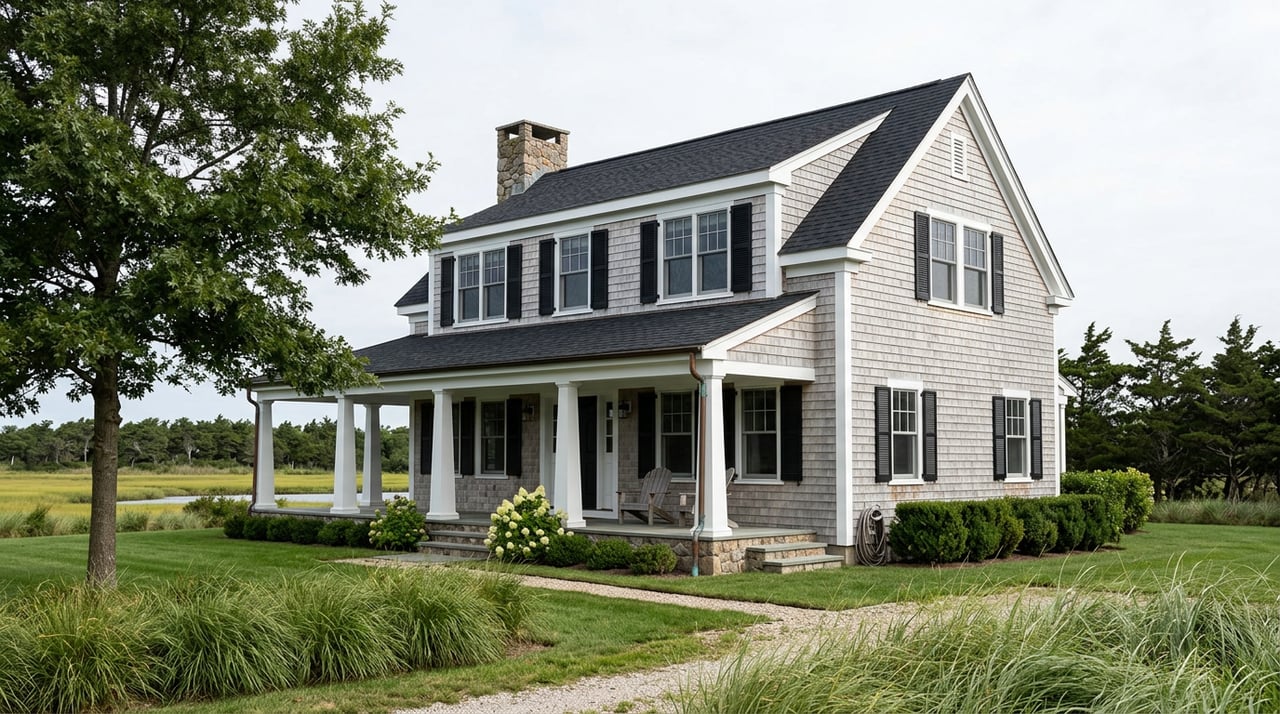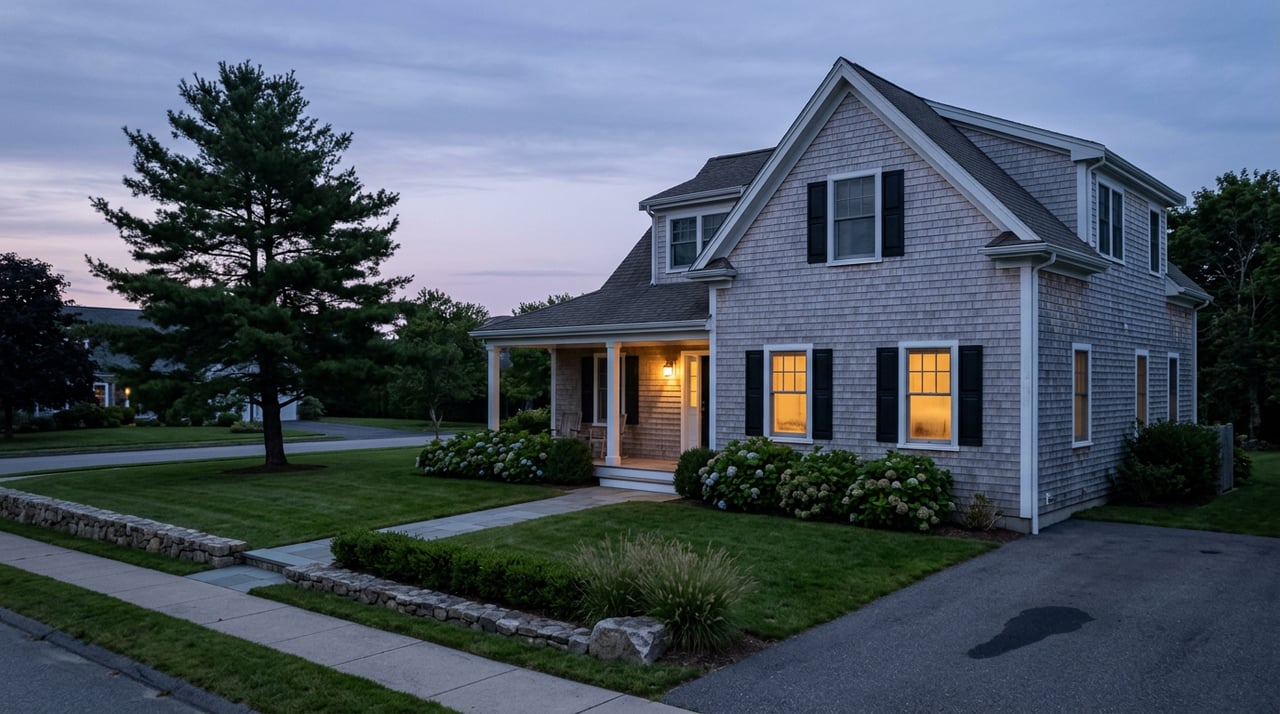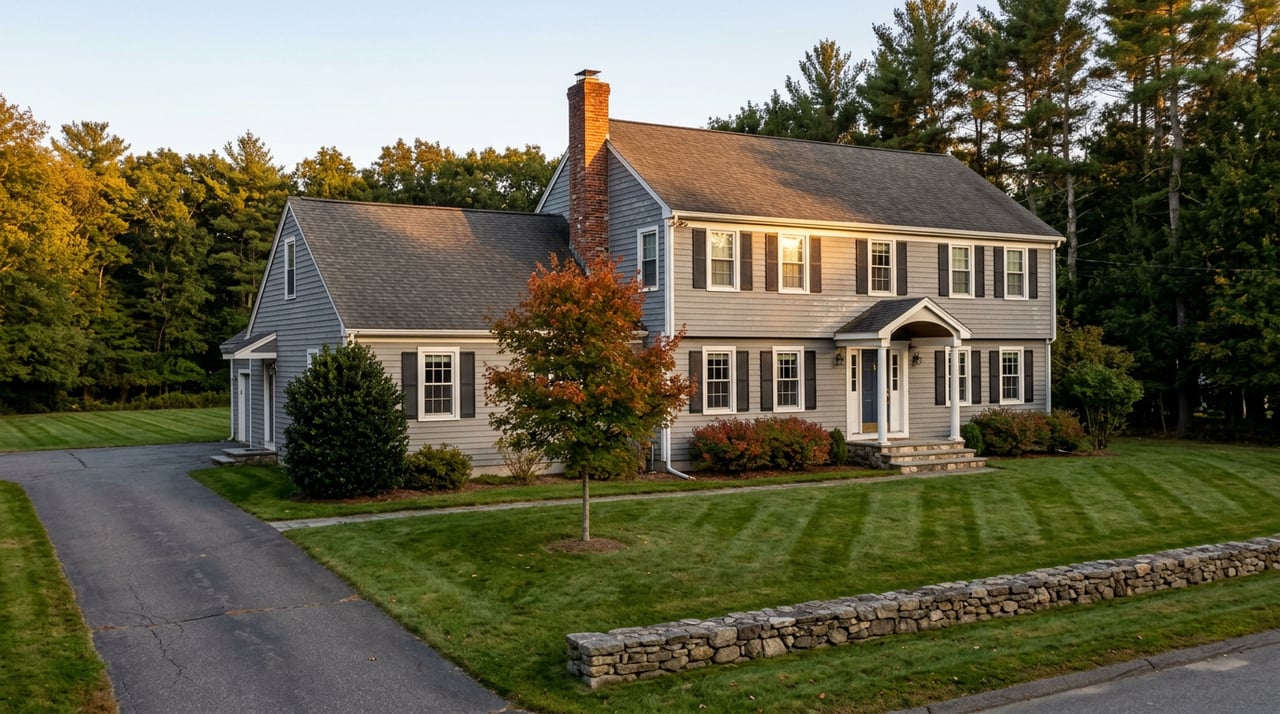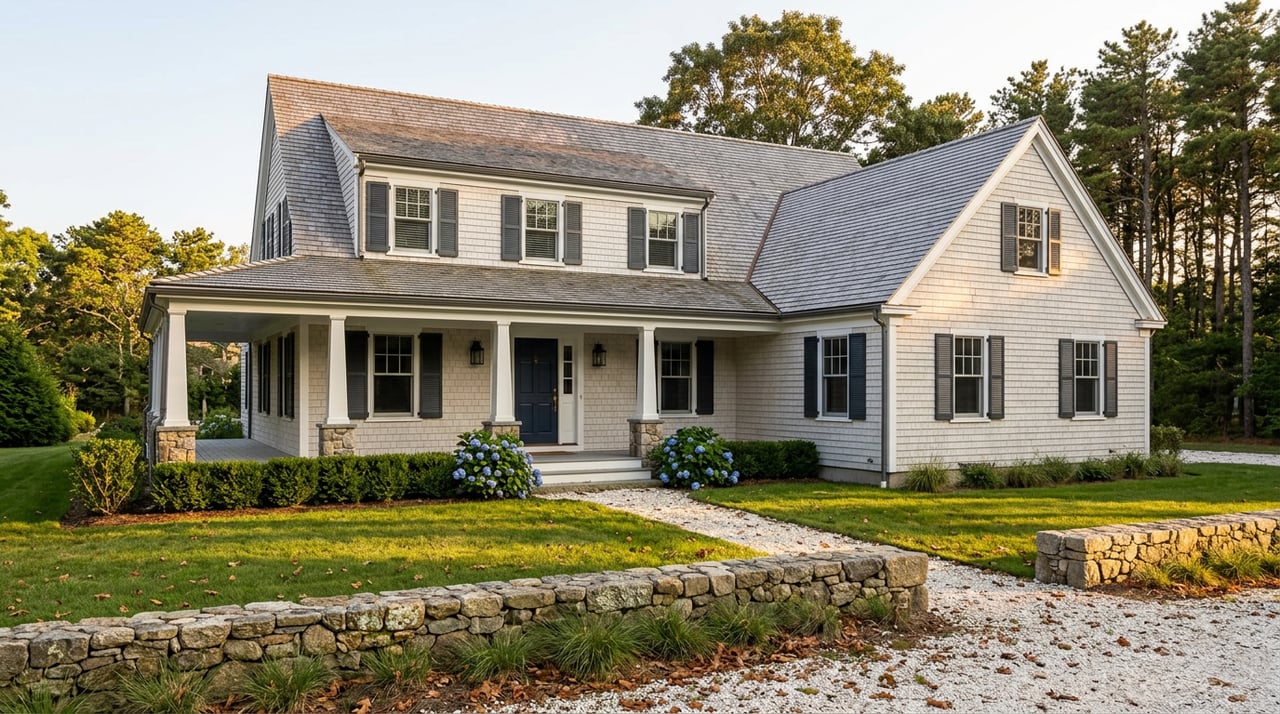
Marc and Joan Hendel spent their life savings building a home in Bourne's Round Hill neighborhood. They bought the land in 2023 and spent roughly two years building their dream house. Three months after moving in, in March 2025, they learned the state was going to take it. Not eventually. Not maybe. The Sagamore Bridge replacement needed their lot, and no one, not their real estate agent, not the seller, not the town, had mentioned the project during the sale.
That story, reported by WBUR, is the kind of detail that makes a buyer nervous about an entire town, not just one street. If you're comparing Bourne to Kingston, Duxbury, or Plymouth right now, you've probably read a headline like this and wondered whether "Bourne" itself is a risk to avoid. It's a fair question. It's also the wrong question, because the project's actual footprint is far narrower than the coverage makes it feel, and the timeline is longer than most buyers assume.
The Footprint Is Smaller Than the Headlines Suggest
The Sagamore Bridge replacement is displacing a specific, countable group of properties in the Round Hill neighborhood, not the town of Bourne broadly. According to Boston Globe reporting from January 2026, the state's plan involves:
- 13 homes taken outright through eminent domain
- 7 additional vacant parcels acquired
- 17 separate "partial acquisitions," where the state takes only a portion of a larger property
That's the full scope of direct displacement for this phase of the project. It's real, and it's devastating for the families involved, people like Joyce Michaud, who had lived near the bridge for more than 25 years before losing her home, and Dave Collins, whose father-in-law developed the Round Hill streets decades ago. But it's a few dozen properties clustered around one specific construction easement, not a town-wide condition. If the home you're looking at isn't on or adjacent to Round Hill, this particular fear doesn't transfer to it just because both properties share a Bourne mailing address.
The Headline vs. What Applies to Most Buyers
| What the coverage emphasizes | What's actually true for most Bourne listings |
|---|---|
| "Massachusetts seizes homes for bridge project" | Applies to roughly 13 homes plus a handful of partial-acquisition parcels in Round Hill |
| "Construction is coming" | MassDOT does not expect equipment on site until late 2027 or early 2028, per WBUR reporting |
| "$4.5 billion megaproject" | State and federal governments are funding it, not Bourne's local tax base |
| "Uncertainty for Cape Cod" | The broader Sagamore/Bourne housing market has kept transacting through the entire process |
The Timeline Nobody Puts in the Headline
Here's the detail that gets lost between the eminent domain notices and the panic they generate: property acquisition and physical construction are two different phases, and they are years apart.
As of this summer, the project is in design and procurement. Major permitting wrapped up earlier in 2026, when the Massachusetts Environmental Policy Act Office issued its certificate on the Final Environmental Impact Report in April, followed by the Federal Highway Administration's Record of Decision in June. MassDOT formally launched its search for a construction contractor earlier this year, with just under $2.5 billion set aside for the Sagamore work specifically, according to Engineering News-Record. Property acquisitions are expected to wrap up by fall 2027. Construction equipment isn't expected on site until late 2027 or early 2028, and full completion of both bridges is targeted for 2037.
If you're closing on a home in Bourne this fall, you are not buying into an active construction zone. You're buying into a multi-year design and procurement period that will eventually become a construction period, on a timeline measured in years, not months. That distinction matters if you're weighing Bourne against a town with no infrastructure project at all, because the actual disruption window for anyone outside Round Hill is still well off in the future.
If you want to track it yourself, MassDOT's Cape Cod Bridges Advisory Group meets September 8, 2026, in the ballroom of Massachusetts Maritime Academy in Buzzards Bay, and the meeting materials are public.
Who's Actually Paying for This
One thing that doesn't show up in a scary headline: the $4.5 billion program isn't coming out of Bourne's property tax base. The Cape Cod Commission's program materials show $1.72 billion in federal funding already secured, including money through the Bridge Investment Program and the National Infrastructure Project Assistance program announced in 2024. The rest is a mix of additional federal grant applications and state capital funds. There's no special assessment landing on Bourne homeowners to pay for this. That's a meaningful difference from, say, a local water and sewer bond that shows up on your tax bill for the next twenty years.
What the Market Is Already Telling You
Dave Collins, whose Round Hill home is assessed at $621,000, put his fear plainly in that same Globe report.
"You couldn't give it away right now."
That's a real concern, and if your home sits inside the construction footprint, it's a legitimate one. But Collins's house sits close enough to the new bridge alignment that his situation is the exception the project created, not the rule for Bourne as a whole. Reporting on the eminent domain process noted that homes in the broader Sagamore area sold over the past year for prices ranging from $450,000 to nearly $2 million, even as the state was actively seizing properties a few streets away. The market hasn't stopped moving. It's pricing this project the way it prices most localized disruptions: hyper-locally, not town-wide.
If You're Comparing Bourne to Other Towns
Bourne's long-standing advantage has always been geography. You get canal-side living, easy access to Route 3 and the Cape Cod Canal bikeway, and a Cape Flyer train stop in Buzzards Bay, all without the bridge traffic that defines the actual Cape side of the canal. The project underway right now is trying to fix the one real complaint about that location: two 90-year-old bridges that were built to carry a fraction of today's traffic. When it's finished, most industry observers and the Cape Cod Commission's own program materials frame it as a long-term upgrade to the region's core infrastructure, not a lingering drag on it.
If you're seriously considering a specific property in Bourne, here's what actually matters, more than the headlines:
Ask where the parcel sits relative to the Round Hill easement and the published project maps. Ask your agent, in writing, whether the property or its immediate neighbors have received any notice from MassDOT. And don't let a general news story about "Bourne" and "eminent domain" talk you out of a home that has nothing to do with the project's actual footprint. The Hendels' story is a caution about disclosure, not a verdict on the whole town.
A Few Straight Answers
Does this affect every home in Bourne? No. The displacement is concentrated in the Round Hill neighborhood near the Sagamore Bridge. Most of the town's housing stock is not in the project's footprint.
When does construction actually start? MassDOT's public timeline points to late 2027 or early 2028 for equipment on site, with property acquisitions wrapping up by fall 2027.
Will my taxes go up to pay for this? The program is funded through federal and state sources, including $1.72 billion in secured federal funding, not local property tax assessments.
How do I find out if a specific property is affected? Ask directly whether the parcel or its neighbors have received notice from MassDOT, and cross-reference the address against the project's published easement maps before you write an offer.
If you're weighing Bourne against another South Shore or Upper Cape town and want a second set of eyes on where a specific address actually sits relative to this project, that's exactly the kind of question worth asking before you fall in love with a listing. Christopher Sheridan has spent years walking Plymouth County and Upper Cape neighborhoods with buyers who need the real story behind the headlines. Let's Connect and talk through what you're looking at.