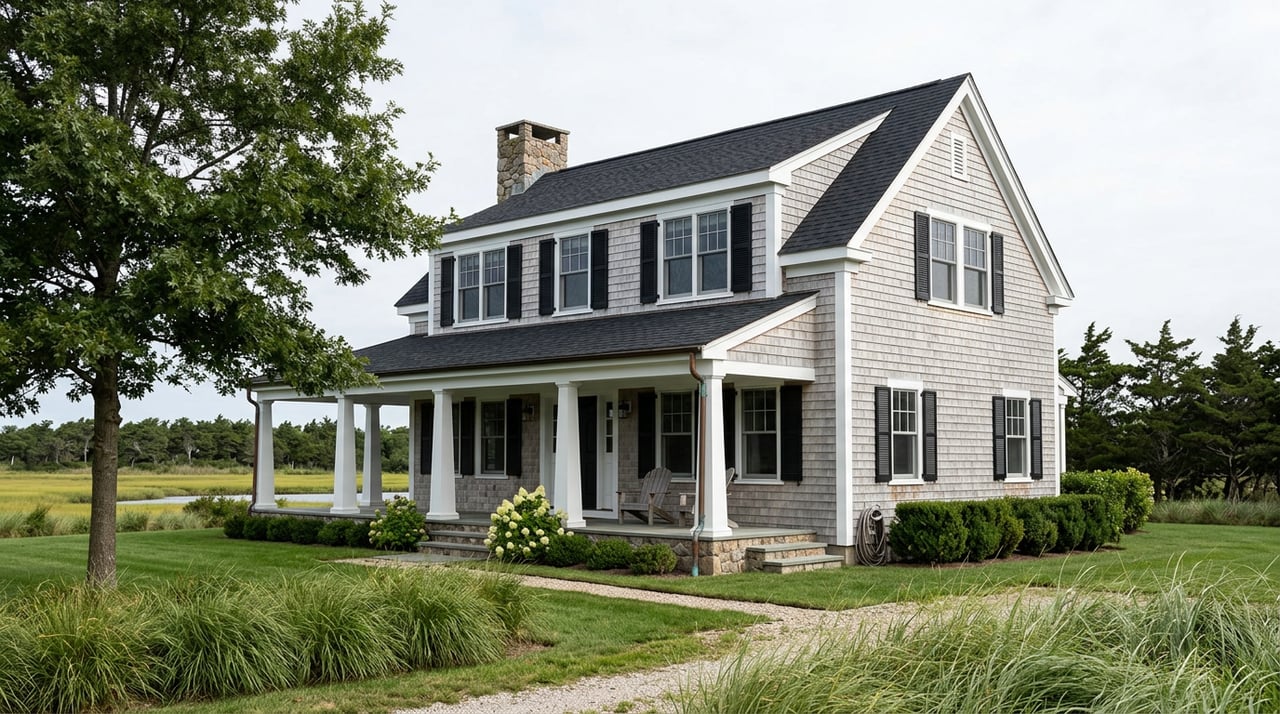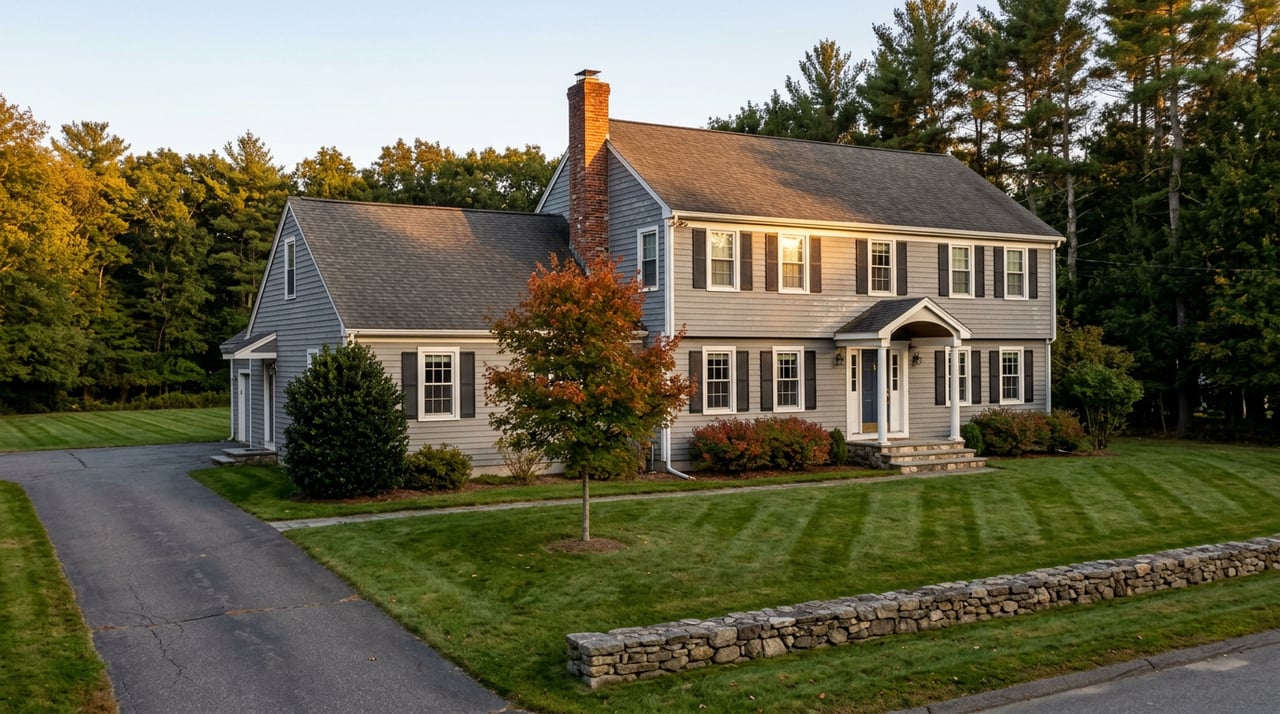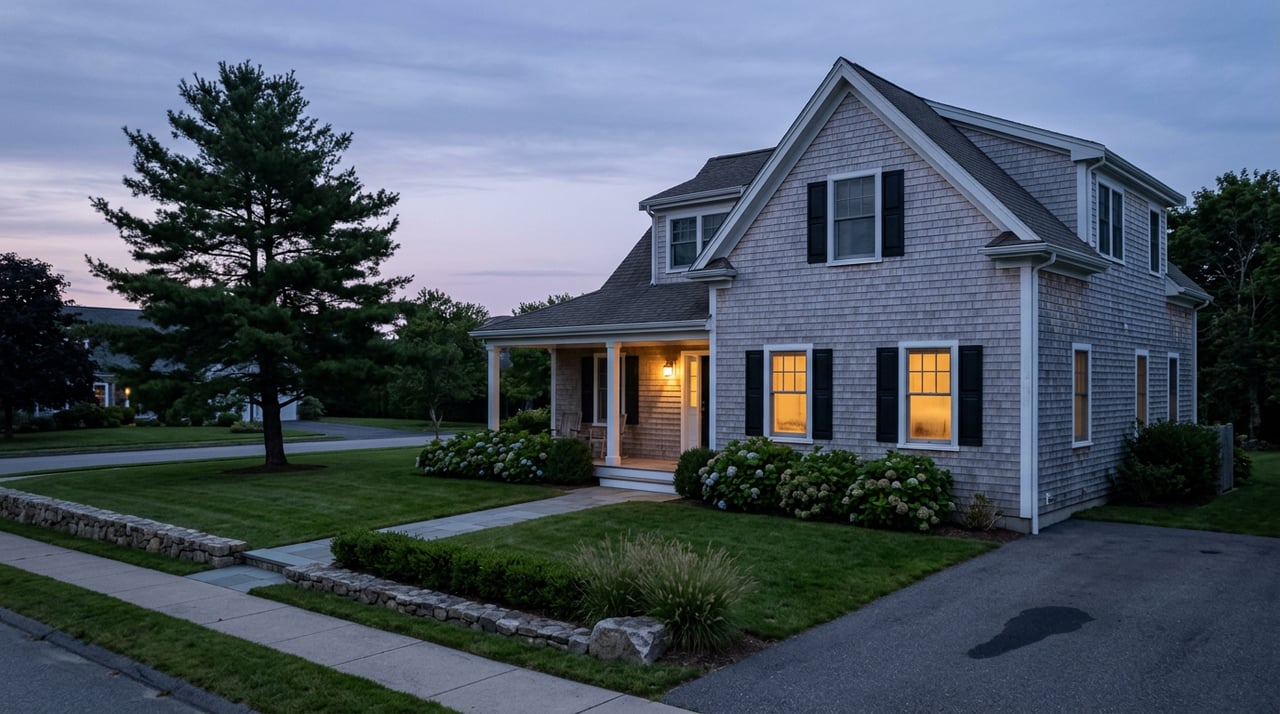
On August 18, 2026, residents of Whitehorse Beach and Manomet packed into Manomet Elementary School to confront the Plymouth Select Board about a construction site off Beach Street and Elm Street. The complaints were specific: heavy trucks moving through narrow residential roads, sand piles rising 60 to 70 feet with no tarp in sight, and one detail that stuck with everyone in the room, an American flag planted at the top of the largest pile where a covering should have been. Elm Street resident Christine Sordillo told town officials the developer, Champion Builders, had stopped honoring mitigation terms it agreed to just weeks earlier.
If you are looking at homes in Manomet right now, that meeting matters to you even if you never plan to live on Elm Street. Not because this one project will define the neighborhood, but because it is a preview of what Plymouth's housing math guarantees will keep happening.
The Permit That Skips the Select Board
Town Manager Derek Brindisi told residents something that surprised a lot of them that night. Chapter 40B comprehensive permits, the state law under which the Champion Builders project was approved, are not decided by the Select Board or the Planning Board. They go through the Zoning Board of Appeals, and the ZBA has limited authority to say no.
Chapter 40B lets a developer bypass most local zoning rules if a town has not reached a 10 percent threshold of subsidized housing on its books. It does not require town meeting approval, and local boards other than the ZBA have almost no formal role in the permitting decision.
That single fact explains why a project can appear in an established, single-family coastal neighborhood without the kind of public hearing process a rezoning or subdivision would normally trigger. The site mitigation issues, the tarps and water trucks and street sweeping, fall to local code enforcement. The permit itself does not.
The Gap Plymouth Is Racing to Close
Here is the number driving all of it. As of a June 30, 2026 Select Board briefing, Plymouth's official Subsidized Housing Inventory sits at 8.42 percent. The state threshold that would let the town reclaim meaningful local control over projects like this one is 10 percent. Assistant Town Manager Lauren Lind told the board the town needs roughly 406 additional units to cross that line.
In response, the Select Board authorized a plan to permit 238 affordable units within 14 months. That is an aggressive push by any town's standard. It is also, by the town's own math, not enough to close the gap. Even if every one of those 238 units gets built on schedule, Plymouth stays under 10 percent and 40B stays live.
That is the part most home shoppers miss when they read about a single contentious project. The Elm Street dispute is not a one-time zoning fight that resolves and goes away. It is a symptom of a number the town has been sitting under for years and cannot close quickly, which means similar projects remain legally possible across Manomet and the rest of Plymouth for the foreseeable future.
Why the Town Leans Into the Same Tool Neighbors Are Fighting
The part of the story that genuinely surprised me is what Select Board member Kevin Canty said about strategy. Rather than treating every 40B application as an adversary to defeat, Canty argued the town should lean into what he called friendly comprehensive permits and use Community Preservation Committee or Affordable Housing Trust funds to buy down deed restrictions on units already under construction.
The reasoning makes more sense once you understand how the SHI math actually works. Under the law, a rental project only needs 20 to 25 percent of its units to carry long-term affordability restrictions. But a town gets to count every single unit in that project, market rate included, toward its Subsidized Housing Inventory. Plymouth's own housing data illustrates this with the Oasis development, a 320-unit complex where only 80 units are deed-restricted affordable, yet all 320 count toward the town's SHI total.
That is the incentive structure nobody explains at a neighborhood meeting. The fastest way for Plymouth to reach 10 percent and regain local zoning authority is not to slow-walk 40B applications. It is to encourage more of them, particularly larger rental developments where the counting math works in the town's favor. The same law generating truck traffic on Elm Street is the tool the town is using to eventually make that kind of project rarer. Until the number moves, both things happen at once.
What to Check Before You Tour a Home Near One of These Sites
If you are seriously considering a property in Manomet, a little homework up front saves you from an unpleasant surprise mid-transaction.
- Ask whether any parcel within a few blocks has an active or recently approved Chapter 40B comprehensive permit, since these move through the ZBA rather than routine planning channels and can be easy to miss in a standard listing search.
- Ask the listing agent or seller whether a site mitigation agreement exists for any nearby construction, and whether the town's Inspectional Services department has an open enforcement file on it. Residents at the August meeting were directed to log violations directly with that office or through SeeClickFix, which tells you those records exist and are checkable.
- Distinguish between construction-phase friction, which is temporary, and any change to the parcel's actual permitted use, which is not. Dust and truck routes end when a project finishes. A zoning change does not.
- Recognize that abutter complaints do not equal a stalled or doomed project. Chapter 40B was written specifically to limit how much local opposition can block an eligible development, so a noisy meeting is not a reliable signal that a project is going away.
None of this means you should avoid Manomet or treat every nearby vacant lot as a threat. It means you should ask the question before you write an offer instead of after.
What This Means for What You're Actually Paying
Here is the part that might be the most counterintuitive. None of this friction has shown up in prices. Zillow's Home Value Index for the Manomet Beach submarket puts the average home value at $585,258 as of July 2026, up 9.6 percent over the prior year. Buyers are not discounting properties near active development, at least not at the neighborhood level.
That tells you something about how the market is actually pricing this risk. In a coastal submarket this tight, proximity to a construction site is treated as background noise rather than a reason to wait. If you are hoping that ongoing 40B disputes will soften competition or open a pricing window, the data from this year does not support that. What it does support is building in a longer due diligence period and asking direct questions about any pending permits before you get deep into a purchase and sale agreement, rather than expecting the market to price that risk in for you.
A Few Straight Answers
Does a Chapter 40B project require town meeting or Select Board approval? No. Comprehensive permits under Chapter 40B are decided by the local Zoning Board of Appeals. The Select Board and Planning Board can weigh in publicly, but they do not hold approval authority over the permit itself.
How can I find out if a property is near a pending or approved 40B application? Start with the Zoning Board of Appeals agenda and minutes, which are public. Comprehensive permit applications and their conditions are also filed with the town and are worth asking about directly if you are touring homes in a specific pocket of Manomet.
Will nearby construction affect my home's future resale value? Based on current data, general proximity to an active 40B project has not suppressed values in the Manomet Beach submarket. What it can affect is your day to day experience during the construction phase, which is a different consideration than long term value and worth weighing on its own terms.
Manomet is still one of the more distinct coastal pockets of Plymouth, and none of this changes what draws people there. It just means the neighborhood's next few years of development are shaped less by local preference and more by a percentage point Plymouth has been trying to close for a while. If you are weighing a home here against another South Shore town, that context is worth having before you tour, not after.
If you want a walk through what's actually pending near a specific street or neighborhood in Manomet, Christopher Sheridan can help you look at it properly. Let's Connect.